
If you have started looking for a vintage digital camera, four names appear again and again: Canon PowerShot, Sony Cyber-shot, Nikon Coolpix and Fujifilm FinePix.
All four produced huge numbers of compact digital cameras through the late 1990s, 2000s and early 2010s, and each range includes models that now appeal to photographers looking for that distinctive early-digital or Y2K look.
The difficult part is deciding which one is right for you.
There is no single brand that is automatically better than the others. A tiny Sony Cyber-shot designed to slip into a pocket is a very different camera from a larger enthusiast Canon PowerShot, while one Fujifilm FinePix can be completely different from another camera carrying the same name.
The most useful question is therefore not simply “Which vintage digicam brand is best?” but “Which camera suits the way I actually want to take photographs?”
Which Vintage Digicam Brand Suits the Way You Shoot?
Before comparing Canon, Sony, Nikon and Fujifilm, think about what you actually want the camera to do.
If you want something for nights out, size and a dependable built-in flash may matter more than manual controls. For travel, optical zoom, battery life and convenient memory cards may be more important. If you are mainly chasing a particular early-digital look, photographs taken with the exact model are more useful than the logo on the front.
That is why two cameras from the same brand can sometimes be less alike than cameras made by completely different manufacturers.
If this is your first older digital camera, our guide to choosing your first vintage digicam explains the basics worth considering before you start comparing particular brands and models.
| Brand family | Best suited to | Check before you buy |
|---|---|---|
| Canon PowerShot | Buyers wanting a huge choice, from simple compacts to more advanced cameras | Battery type, memory-card format and how advanced the individual model is |
| Sony Cyber-shot | Pocketable everyday cameras, parties, travel and a strong 2000s feel | Memory Stick type, supported capacity, battery and charger |
| Nikon Coolpix | Buyers wanting everything from straightforward compacts to unusual early designs | Age, storage, battery type and whether the controls suit you |
| Fujifilm FinePix | People interested in particular FinePix models and older Fujifilm sensor technology | Exact sensor, xD-card compatibility, battery and charger |
Canon PowerShot: A Strong All-Round Starting Point
Canon's PowerShot name covers an enormous range of digital cameras, which is both its strength and the reason you need to look beyond the badge.
Canon was producing consumer PowerShot cameras in the 1990s. Early models such as the PowerShot A5 used a CCD sensor and CompactFlash storage, while later ranges expanded into simple family cameras, genuinely pocketable compacts, travel cameras and more advanced models offering greater control over exposure.
Later PowerShot cameras also benefited from Canon's DIGIC image processing, which influenced aspects such as colour, exposure, noise reduction and JPEG output.
That variety makes PowerShot a good family to explore if you are not yet certain what type of vintage digicam you want.
Some A-series PowerShots are relatively substantial cameras and certain models use ordinary AA batteries, which can be convenient today because replacements are easy to find. Other PowerShots are much smaller and rely on proprietary rechargeable battery packs. Storage also changed across generations, from CompactFlash in some earlier cameras to SD cards in many later models.
The important thing is not to assume every PowerShot has the same character. Some are extremely simple point-and-shoot cameras, while others provide manual exposure settings and considerably more control.
Canon PowerShot may suit you if: you want plenty of choice and like the idea of being able to choose between a simple everyday compact and something with more traditional camera controls.
Sony Cyber-shot: Pocketable Cameras with a Very 2000s Feel
Sony Cyber-shot cameras are particularly easy to associate with the compact-camera era because so many were designed to be genuinely small enough to carry everywhere.
Ranges including the W-series, P-series and other Cyber-shot families produced cameras aimed at everyday photography, holidays, parties and social use. That makes many of them especially appealing today to people who want a small dedicated camera rather than something that feels like a miniature DSLR.
A compact Cyber-shot with a working built-in flash can be a natural choice for nights out and casual photographs. A tiny Sony is also far more likely to come with you if you can simply put it in a pocket or small bag.
There is, however, one practical detail you need to check carefully: memory cards.
Many older Sony digital cameras use a version of Sony Memory Stick rather than SD. Memory Stick, Memory Stick PRO and Memory Stick Duo are not universally interchangeable across every camera, and supported card capacities vary between models.
That does not make Sony cameras difficult to own. It simply means you should establish exactly which memory card the camera requires before buying it rather than assuming any Memory Stick will work.
The same applies to batteries. Many Cyber-shots use proprietary rechargeable packs, so check that a suitable battery and charger are included or that replacements remain practical to obtain.
Sony Cyber-shot may suit you if: you want a small, stylish and genuinely pocketable digicam for parties, travel or everyday photographs and you do not mind checking the battery and Memory Stick requirements first.
Nikon Coolpix: From Simple Compacts to More Unusual Designs
Nikon's Coolpix history stretches back to the early years of consumer digital photography, and some of its earliest models looked very different from the conventional pocket cameras that followed.
The Coolpix 900, for example, used a distinctive swivelling design that allowed the lens section to rotate independently. Later Coolpix cameras became much more conventional, eventually covering everything from simple family point-and-shoot cameras to long-zoom compacts and more advanced models.
That variety means “buy a Coolpix” is almost as broad a recommendation as “buy a PowerShot”. The individual model and generation matter far more than the name alone.
For a beginner, a straightforward Coolpix with a working flash, easy-to-manage battery and practical memory-card format can be an excellent choice. Older and more unusual models may appeal more to somebody interested specifically in the history and character of early digital photography.
The familiar Nikon name can be reassuring, but do not assume every Coolpix behaves like a modern Nikon camera. Some are extremely basic and others are very much products of the period in which they were designed.
Nikon Coolpix may suit you if: you want to explore a long and varied range from a traditional photographic manufacturer and are happy to compare individual models rather than chase one particular series.
Fujifilm FinePix: Popular with CCD Fans, but Check the Exact Model
Fujifilm's FinePix range has developed an especially strong following among vintage-digicam enthusiasts, partly because Fujifilm developed its own Super CCD sensor technology and used versions of it in a number of FinePix cameras.
That does not mean every FinePix uses Super CCD, or even that every FinePix uses the same type of sensor. The name covers a large family of cameras produced over many years.
One well-known example is the FinePix F10, introduced in 2005. Fujifilm promoted the camera around its unusually high sensitivity for the time, reaching ISO 1600 and making lower-light photography more practical than on many contemporary compact cameras.
That type of FinePix can be very different from a basic point-and-shoot model intended mainly for casual daylight photography.
Storage is another consideration. Fujifilm was involved in the development of xD-Picture Card, and many FinePix cameras from the 2000s use xD rather than SD. Suitable cards still exist, but availability and capacity options are more limited than with common modern SD cards.
If a particular FinePix attracts you because of its sensor or the photographs you have seen online, check the specification for that exact model rather than assuming every Fujifilm camera will produce the same result.
Fujifilm FinePix may suit you if: you are particularly interested in certain FinePix models or older Fujifilm sensor technology and are willing to check xD-card and battery requirements carefully.
Which Vintage Digicam Brand Is Best for Beginners?
For a first vintage digicam, I would not choose solely by brand.
I would choose whichever good-condition camera gives you the simplest combination of reliable power, available storage, a working flash and controls you understand.
A Canon using ordinary AA batteries and a compatible SD card may be very easy to live with. A tiny Sony may be far more likely to come with you on a night out. A straightforward Nikon could feel immediately familiar, while a particular Fujifilm may appeal because you have already seen photographs from it and like the results.
For a beginner, practical usability beats prestige.
A camera you can charge or power easily, load with a suitable memory card and put straight into your pocket is usually a better introduction than a fashionable model that requires an expensive battery, obscure charger or difficult-to-find storage.
Which Vintage Digicam Is Best for Nights Out?
For parties and nights out, I would prioritise size, flash and simplicity.
You want something small enough that carrying it does not become a chore, a built-in flash that charges and fires reliably, and automatic exposure that lets you take a photograph quickly without spending time navigating menus.
This is where many small Sony Cyber-shots, compact Canon PowerShots, Nikon Coolpix models and slim Fujifilm FinePix cameras can all make sense.

The condition of the individual camera matters more than the badge. If the direct-flash look is what attracted you to vintage digicams in the first place, make sure the flash actually works properly before buying.
Which Brand Gives the Best Retro or Y2K Look?
There is no reliable answer at brand level.
A common mistake is to assume all Canon cameras look one way, all Fujifilm cameras share a particular colour palette or every CCD-equipped Sony produces the same sort of image.
They do not.
The finished photograph is affected by the individual sensor, lens, flash, exposure system, white balance, resolution and the manufacturer's JPEG processing. Even two cameras using similar CCD technology can produce visibly different results.
If the early-digital or Y2K look is your main reason for buying, look for photographs taken with the exact model you are considering rather than choosing purely because of the name on the front.
Our CCD digicams explained guide looks in more detail at the role of the sensor and why CCD is only one part of what creates the retro digital-camera look.
Do Canon, Sony, Nikon and Fujifilm All Use CCD Sensors?
No. This is another reason to compare individual cameras rather than brands.
All four manufacturers produced cameras using CCD technology during the digicam era, but their ranges changed over time and later cameras may use CMOS or other sensor designs.
Even within the same product family, sensor technology can change from one generation to another.
If buying a CCD camera specifically matters to you, verify the specification of the exact model rather than assuming that an old PowerShot, Cyber-shot, Coolpix or FinePix automatically contains a CCD sensor.
Which Memory Cards Do Vintage Digicams Use?
This may sound less exciting than sensors and image character, but memory-card compatibility can make a big difference to how easy an older camera is to own.
Across Canon, Sony, Nikon and Fujifilm cameras you can encounter SD, CompactFlash, Memory Stick and xD-Picture Card, depending on the camera and its age.
Older cameras may also have strict capacity limits. A card can physically fit into the slot and still be too new or too large for the camera to recognise.
Before buying, check the manual or reliable specification for the exact model and establish:
- which memory-card format it uses;
- which capacities it supports;
- whether a suitable card is included;
- and how you will transfer the photographs afterwards.

If your camera uses compatible SD or microSD storage, you can also browse our memory cards and card readers. Always check the card format and maximum supported capacity for the exact camera first.
Condition Matters More Than the Name on the Front
It is easy to get drawn towards whichever PowerShot, Cyber-shot, Coolpix or FinePix is receiving the most attention online, but these cameras are now ageing electronics.
A less fashionable camera in excellent working condition can be a much better purchase than a sought-after model with a sticking lens, weak battery, damaged LCD or unreliable flash.
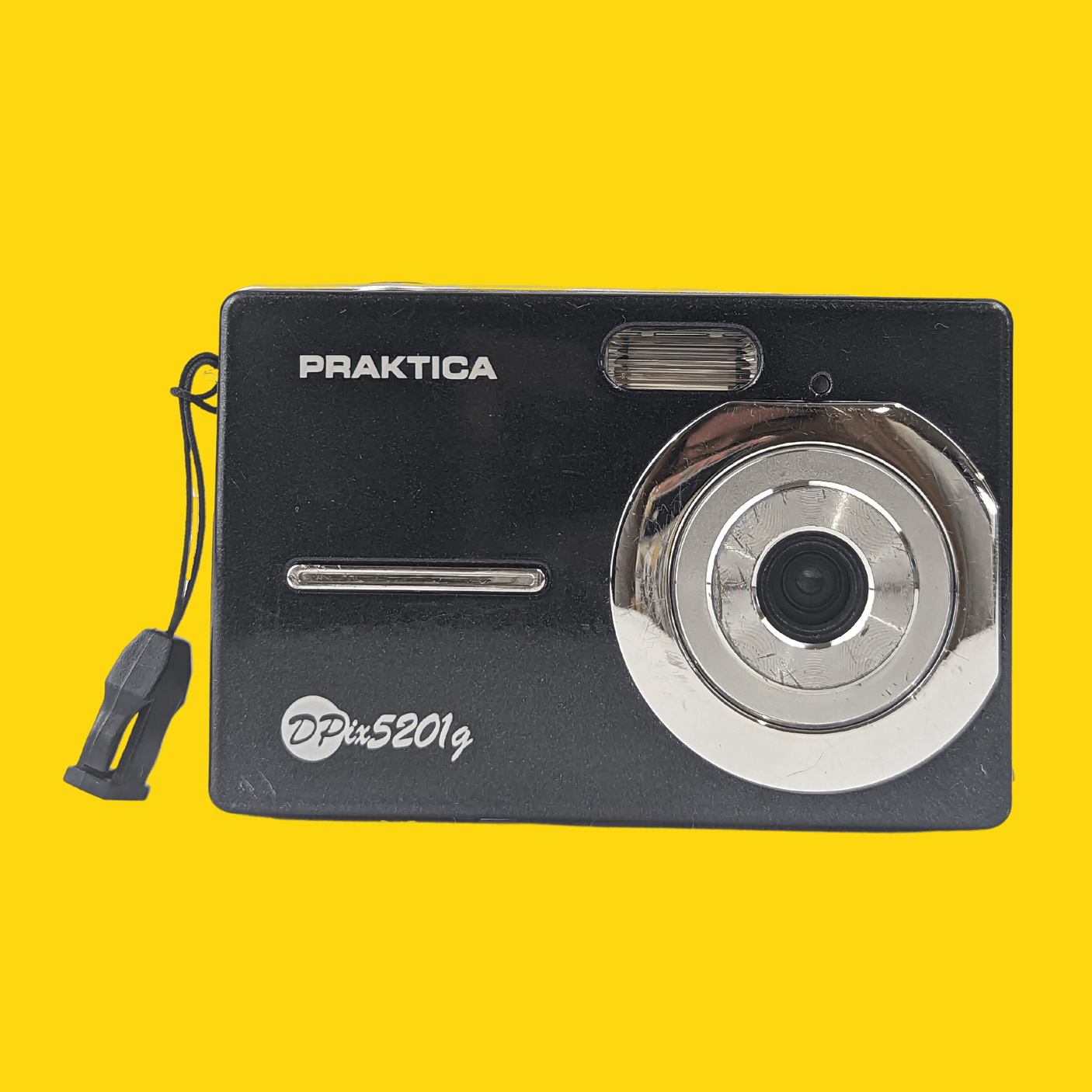
Check that the camera powers on consistently, the lens extends and retracts correctly where applicable, autofocus works, the flash fires, the LCD remains usable and photographs save properly to the memory card.
Also check the battery compartment for corrosion and make sure any proprietary charger you need is included or readily obtainable.
Our vintage digital camera buying checklist covers these checks in considerably more detail.
Which Vintage Digicam Brand Is Right for You?
If you are choosing between these four brands, start with how you want to use the camera rather than the name on the front.
Choose Canon PowerShot if you want the widest choice of models, from simple point-and-shoot cameras to more advanced compacts with greater control over exposure and settings.
Choose Sony Cyber-shot if you want something small, stylish and genuinely pocketable for nights out, travel or everyday photography, and you are happy to check Memory Stick and battery compatibility.
Choose Nikon Coolpix if you want a broad choice of straightforward compact cameras, with some more unusual early digital designs available if you want something a little different.
Choose Fujifilm FinePix if you are interested in distinctive older models, including some cameras using Fujifilm's Super CCD technology, and you are comfortable checking xD-card and battery requirements.
But none of those recommendations should override the most important rule: buy the individual camera, not just the brand.
Look at sample photographs from the exact model, check its condition, confirm how you will power it and make sure you can obtain the correct memory card. The best vintage digicam is the one that gives you the kind of photographs you like and is easy enough to use that you will actually take it with you.
You can browse the Film Camera Store digital camera collection to see the compact digital cameras and accessories currently available.
(FCS-B-105)