
Do CCD Sensors Produce Unique Image Effects?
Spend any time looking at vintage digital cameras and you will eventually come across the same idea: CCD digicams have the retro look.
There is some truth behind that association. CCD sensors were used in a huge number of compact digital cameras during the late 1990s and 2000s, exactly the period that is now being rediscovered by photographers looking for that early-digital or Y2K aesthetic.
But there is an important distinction. A CCD sensor does not automatically give every camera the same colours, make photographs look like film or guarantee that an old digital camera will produce the look you want. The sensor contributes to the result, but so do the lens, built-in flash, white balance, resolution, exposure and, crucially, the way the camera processes the photograph into a JPEG.
So what actually is a CCD sensor, how is it different from CMOS, and why have CCD cameras become so closely associated with the vintage digicam look?
Why CCD Became Part of the Digicam Look
CCD stands for Charge-Coupled Device. It is a type of digital image sensor that converts the light entering the camera into electrical information that can eventually become a photograph.
CCD sensors were widely used in consumer digital cameras during the period when compact digicams were replacing film point-and-shoot cameras but had not yet been replaced themselves by smartphones. As a result, a large proportion of the family photographs, holidays, school trips, nights out and early social-media images we associate with the 2000s happened to be made with CCD cameras.
That timing matters. When people rediscover the appearance of those photographs today, the technology and the aesthetic naturally become linked.
If you are new to older digital cameras generally, our guide to choosing your first vintage digicam explains the wider differences between the cameras available and what a beginner should look for.
What Does a CCD Sensor Actually Do?
A digital image sensor contains millions of light-sensitive areas called pixels. When light reaches those pixels, it is converted into electrical charge. The camera then has to read that information and turn it into the digital data used to create the photograph.
In a CCD sensor, the accumulated charge is transferred across the sensor towards a relatively small number of output points where it is converted into a usable signal. That charge-transfer process is where the name Charge-Coupled Device comes from.
This was an extremely successful approach to digital imaging and, for many years, CCD technology offered the consistency and image quality needed for everything from consumer cameras to scientific equipment.

The Vivitar ViviCam 3935 is a useful real example. Its original specification confirms a 1/1.8-inch CCD sensor with five million effective pixels, alongside a 3× optical zoom lens and built-in flash.
CCD vs CMOS: What Is the Difference?
CMOS stands for Complementary Metal-Oxide-Semiconductor. Like CCD, a CMOS sensor converts incoming light into electrical signals, but the way the information is read from the sensor is different.
With CCD, charge is moved across the sensor towards shared readout electronics. In a CMOS sensor, pixels are read much more directly and the sensor can contain much more of its processing circuitry on the chip itself.
Neither technology can simply be described as “good” or “bad”. Early in digital photography, CCD had advantages that helped it dominate many imaging applications, while improvements in semiconductor manufacturing allowed CMOS sensors to become progressively faster, more efficient and more capable. Modern consumer cameras and smartphones now overwhelmingly use CMOS technology.
That technological history does not mean a CCD camera automatically makes better photographs, nor does it mean an older CMOS camera automatically produces a modern-looking image. The age and design of the whole camera matter much more than that.
Why Do CCD Digicams Have Such a Strong Reputation?
The answer is partly technical and partly cultural.
Technically, cameras from the CCD era often behave differently from modern devices. Their sensors are smaller, resolution is lower, dynamic range can be more limited and the image-processing systems inside them are much simpler than those used by current smartphones.
Culturally, these cameras recorded a very recognisable period. The slightly hard direct flash, bright faces against darker backgrounds, modest resolution, visible noise and sometimes unexpected colour are all characteristics people now associate with photographs from the 2000s.
Because CCD sensors were so common in cameras from that period, “CCD” has gradually become shorthand for the entire aesthetic. That is understandable, but it also risks attributing everything we like about an old photograph to one component inside the camera.
The Lens, Flash and Processing Matter Too
A camera is a complete imaging system. The sensor is only one part of it.
The lens affects sharpness, contrast, flare and how light reaches the sensor. Compact digital cameras had tiny lenses designed to fit into small bodies and meet a particular price point. Different manufacturers and models therefore produced noticeably different results even when their cameras used similar sensor technology.
The built-in flash has an even more obvious effect. Most compact digicams place a small flash close to the lens. At night or indoors, that creates hard, frontal lighting: the subject can appear very bright while the background quickly becomes much darker.
It is one of the most recognisable features of the early-digital aesthetic, and it has nothing specifically to do with whether the sensor underneath is CCD or CMOS.
Then there is the camera's own processing, which is often overlooked completely.
The JPEG Engine Is a Big Part of the Retro Look
The sensor does not produce the finished photograph you see on the screen. It captures image information that still has to be interpreted by the camera.
A typical compact digicam shooting JPEG has to turn that sensor data into colour, decide on white balance, set contrast and tone, apply sharpening, reduce noise and compress everything into a JPEG file.
Manufacturers did not all make those decisions in exactly the same way. One camera might produce stronger contrast or saturation, while another may sharpen more aggressively or handle artificial lighting differently. Automatic white balance could also vary noticeably between models.
This is why two cameras from the same period, both using CCD sensors, can still produce quite different photographs.
It is also one reason I would be wary of buying a camera simply because somebody online has labelled it a “CCD digicam”. Looking at photographs actually produced by that model tells you much more.
Why Direct Flash Changes the Look So Much
Flash deserves particular attention because it is responsible for a large part of the appearance now associated with nights out and Y2K photography.
A small built-in flash throws a short, relatively hard burst of light directly towards the subject. At close range, faces, clothing and objects in the foreground can become brightly illuminated while the background receives much less light.
The camera's automatic exposure and white balance then respond to that scene. Skin tones may appear warmer or cooler, highlights can look bright and shadows can fall away quickly.
That combination of a simple flash, small sensor and older JPEG processing is often much more important to the final aesthetic than the letters “CCD” written on a specification sheet.
Does Lower Resolution Help Create the Vintage Digital Look?
It can.
A typical early compact might have three, four, five or six megapixels rather than the much larger files produced by today's cameras and phones. That lower resolution changes the amount of fine detail available and can contribute to a softer, less clinical appearance.
Older cameras may also apply relatively obvious sharpening and noise reduction to those smaller files. When the image is viewed on a phone screen, shared online or enlarged beyond its original intended size, those characteristics become more noticeable.
That does not mean fewer megapixels automatically makes a photograph better. It simply means resolution is another ingredient in the look people are rediscovering.
It is also why chasing the highest megapixel count is not necessarily the best way to choose a retro digital camera.
Does CCD Give Better Colour?
This is probably the biggest misconception surrounding CCD digicams.
You will often see claims that CCD automatically creates richer, warmer, more film-like or more accurate colour. That is too broad a statement.
The colour in the finished photograph is influenced by the sensor, but also by the colour filters over the sensor, the camera's automatic white balance, exposure, lens and — most importantly for a JPEG compact — the manufacturer's own image-processing decisions.
That is why a Canon compact, Sony Cyber-shot, Nikon Coolpix or Fujifilm FinePix from a similar period can each have its own recognisable character even when the cameras use broadly similar sensor technology.
If you like the colours produced by a particular CCD camera, that is a perfectly good reason to seek out that model. Assuming every CCD camera will produce those same colours is much less reliable.
Can a CMOS Digicam Still Look Retro?
Yes — and this is an important point if you are choosing an older digital camera.
The Praktica DPix 5201G is a useful example from the Film Camera Store archive. Its original specification identifies it as a five-megapixel camera using a 1/2.0-inch CMOS sensor rather than CCD. It also has a fixed-focus lens, basic built-in flash, modest resolution and relatively simple JPEG processing.
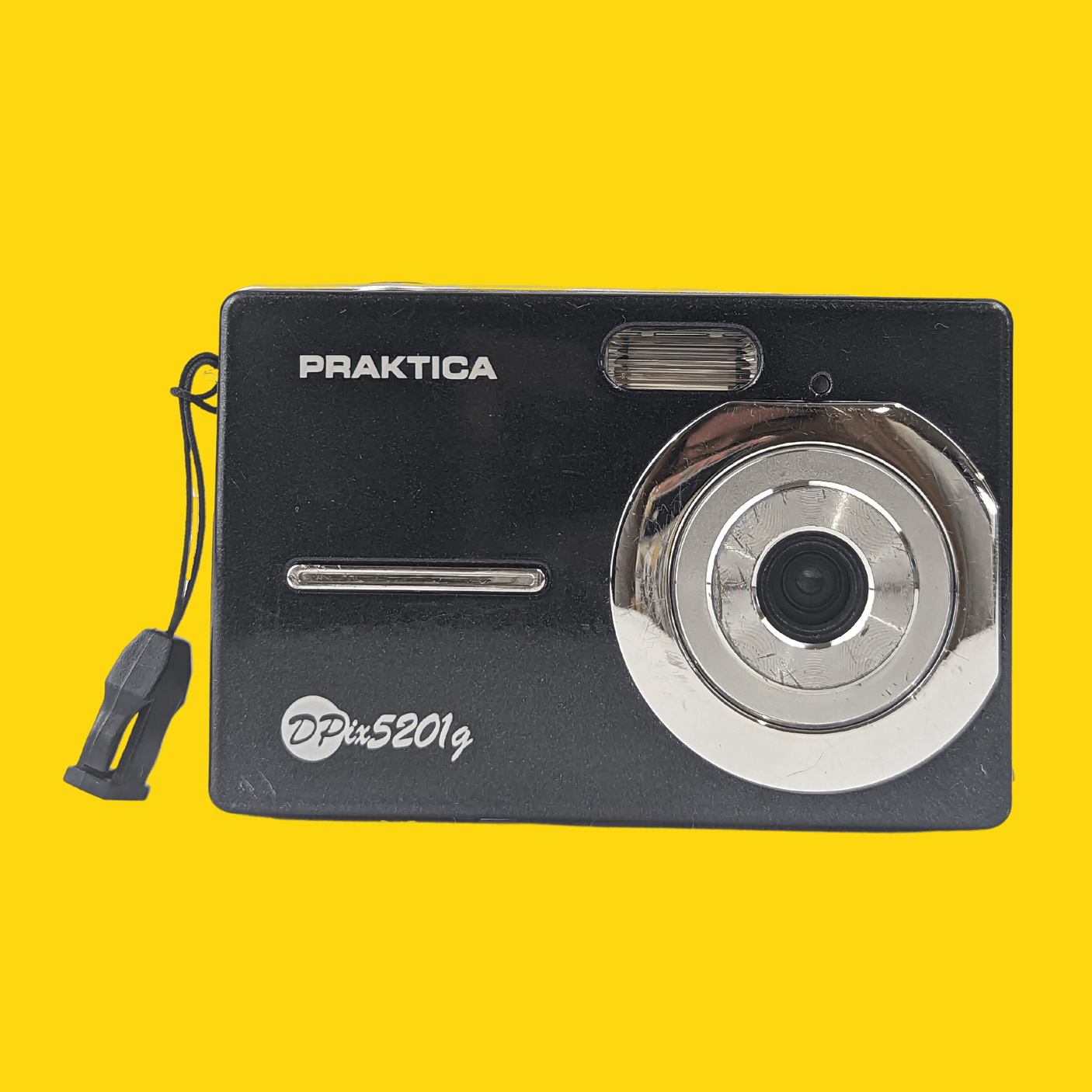
It is still very much an early-digital compact camera. Its images are shaped by the same broader factors — resolution, simple lens, flash, white balance and processing — even though the sensor technology is different.
So if your aim is the wider retro digital or Y2K camera look, rejecting every CMOS camera before looking at what it actually produces could mean overlooking a camera you would enjoy.
CCD Artefacts: Blooming and Smear
CCD technology can also produce some characteristics that are genuinely connected with the way the sensor works.
When an area becomes extremely bright, excess charge can sometimes affect neighbouring parts of a CCD sensor, producing what is known as blooming. Under some conditions, very bright light sources can also create vertical smear.
These are real CCD behaviours, but they should not be treated as the secret behind the entire vintage-digicam aesthetic. Most everyday photographs taken on a CCD compact will not contain dramatic blooming or smear, and neither phenomenon explains the normal colour or contrast of every CCD photograph.
Should You Buy a Digicam Because It Has a CCD Sensor?
I would choose the camera first and the sensor second.
If you have seen photographs from a particular CCD camera and you genuinely like the way they look, that is a good reason to consider it. CCD cameras can be fun, distinctive and relatively affordable ways to experiment with older digital photography.
But condition matters more. A desirable CCD model with a failing zoom mechanism, badly corroded battery compartment or unavailable charger is unlikely to be a better purchase than a less fashionable CMOS camera that works perfectly.
Check the flash, battery, charger, memory-card compatibility, LCD and lens mechanism before buying. Our guide to what to check before buying a vintage digital camera covers those practical checks in detail.
What Really Creates the Retro Digicam Look?
There is no single component responsible for it.
CCD sensors are genuinely an important part of early digital-camera history, and many of the compact cameras whose photographs define the era used them. But the look people are rediscovering today comes from the whole camera working together: sensor, lens, resolution, flash, exposure, white balance and in-camera JPEG processing.
That explains why two CCD cameras can produce noticeably different photographs and why an older CMOS camera can still immediately look like something from the 2000s.
Rather than treating CCD as a guarantee of a particular aesthetic, it makes more sense to use it as one clue. Look at photographs taken with the camera, consider how you intend to use it and choose the camera whose results you actually like.
You can browse the Film Camera Store digital camera collection to see the compact digital cameras and accessories currently available, or return to our beginner's guide to choosing your first vintage digicam.
(FCS-B-104)