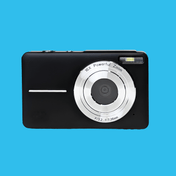

A good point-and-shoot is the sort of camera you can leave in a coat pocket or bag and actually have with you when something happens.
That is a large part of the reason 35mm compact cameras have remained so appealing. You do not necessarily have to choose a lens, meter the scene or think through several settings before taking a photograph. Load a roll of film, frame the shot and press the shutter. On a fully automatic camera, focusing, exposure, flash and film advance may all be handled for you.
For someone trying film for the first time, that makes the whole process much less intimidating. For an experienced photographer who normally uses an SLR or another more involved camera, the attraction can be different: a point-and-shoot removes some of the decisions and lets you respond more quickly to everyday life.
The difficulty is that 35mm point-and-shoot describes a surprisingly broad family of cameras. A very simple fixed-focus compact, an Olympus Trip, a Canon Sure Shot, an Olympus Mju and a motorised Pentax zoom can all be described as point-and-shoot cameras while offering very different experiences.
So rather than simply producing another list of fashionable models, this guide looks at the things that actually help you choose one: lens type, focal length, autofocus, flash behaviour, batteries, electronics, condition and the kind of photography you intend to do.
Browse Film Camera Store's 35mm Point & Shoot Cameras


Different approaches to the 35mm point-and-shoot, from simple fixed-lens compacts to more versatile zoom models.
What Is a 35mm Point-and-Shoot Camera?
At its simplest, a point-and-shoot is a compact camera designed to remove much of the technical work involved in taking a photograph. Most use standard 35mm film and have a permanently attached lens. Unlike an SLR, you usually compose through a separate optical viewfinder rather than looking directly through the taking lens.
How much the camera actually does for you depends on the model. A basic compact may have little more than a fixed-focus lens, a shutter and a simple flash. A later electronic camera may automatically identify the film speed, focus the lens, calculate the exposure, decide when flash is needed, advance the film after every shot and rewind the roll at the end.
That difference is worth understanding because point-and-shoot does not automatically mean fully automatic.
Older and simpler cameras may use fixed focus or ask you to estimate the distance to the subject. From the late 1970s onwards, manufacturers increasingly introduced autofocus, programmed exposure and powered film transport. By the 1990s, many compact cameras had become remarkably sophisticated for something designed to sit in a pocket.
That is why the first useful question is not necessarily “Which brand should I buy?” It is how much do I want the camera to do for me?
Why Choose a Point-and-Shoot Instead of an SLR?
The main advantage is convenience.
A 35mm SLR gives you interchangeable lenses, direct through-the-lens viewing and much greater control over shutter speed, aperture and focusing. Those advantages make an SLR a very good choice if you specifically want to learn exposure or build a system around several lenses.
The compromise is that an SLR normally requires more involvement. Even a relatively compact one is usually bulkier than a pocket camera, and you have more decisions to make before pressing the shutter.
A point-and-shoot trades some of that control for speed and portability. That is why these cameras work particularly well for travel, street photography, parties, family photographs, festivals and ordinary days when carrying a full camera kit simply feels excessive.
There is another benefit that is harder to put on a specification sheet: a small camera tends to get used. A technically superior camera sitting at home produces no photographs. A compact that you habitually drop into a bag can end up recording far more of your life.
For somebody starting out, point-and-shoot photography also allows you to get used to film itself before learning every technical control. You begin to understand the limitation of 24 or 36 exposures, how different light affects photographs and the very different rhythm created by not having an instant preview.
If learning aperture, shutter speed and manual focusing is your main aim, an SLR may still be the better choice. Our How to Choose Your First Film Camera guide looks at those broader differences in more detail.
Fixed Focus, Zone Focus and Autofocus
Focusing is one of the biggest differences between compact cameras, and it has a real effect on how the camera feels to use.
A fixed-focus camera does not adjust its focus for every photograph. Instead, the lens and aperture are designed so that a useful range of distances appears acceptably sharp. This makes the camera exceptionally simple, although it is less suitable for very close subjects or situations where precise focusing matters.
A zone-focus camera gives the photographer more involvement. Rather than viewing the exact focus through the finder, you select an approximate distance range. Once you understand the system it can be surprisingly quick, but it requires a little more judgement than autofocus.
An autofocus point-and-shoot handles that decision electronically. You aim at your subject and the camera measures the distance and adjusts the lens.
For most beginners, autofocus is the easiest system. It is also particularly well suited to the quick, spontaneous photography for which compact cameras became popular.
The qualification is age. Many of the autofocus cameras we are buying today are now several decades old. A camera can power on and appear almost immaculate while still having inaccurate focusing, a weak motor or another electronic fault. With vintage compact cameras, “it switches on” and “it works properly” are not the same thing.
Fixed Lens or Zoom Lens?
This is probably the single most useful decision to make before choosing a particular camera.
A fixed-lens compact gives you one focal length. If you want somebody larger in the frame, you move closer. If you want more of the surroundings, you step back.
That sounds limiting until you have used one for a while. Working with one focal length teaches you very quickly what the camera is going to see. You often begin framing the photograph mentally before the viewfinder reaches your eye.
A zoom point-and-shoot offers a different kind of convenience. You can photograph a broad scene and then tighten the composition without moving. On holiday, at events or when photographing something you cannot easily approach, that flexibility can be genuinely useful.
There are compromises. Zoom mechanisms add size and moving parts, and compact zoom lenses frequently have smaller maximum apertures towards the long end. That can make the camera more dependent on flash or faster film when the light falls.
Neither design is inherently better. The real question is whether compactness and simplicity or framing flexibility matters more to you.


What Focal Length Should You Look For?
You do not need to become obsessed with lens specifications to choose a good compact camera, but focal length gives you a useful idea of what the camera naturally sees.
A lens around 28mm gives a noticeably wider view and can be useful for interiors, buildings, groups and street scenes. Around 35mm is a classic everyday focal length, while 38–40mm gives a slightly tighter but still very natural view for general photography.
With a zoom camera you are effectively getting several framing options in one body. That does not mean you need the longest zoom range available. In practice, a modest useful range often suits everyday photography better than buying purely because one model has the biggest number printed on the front.
Once you know whether you prefer a fixed lens or a zoom, the question becomes much easier: what sort of photographs do I expect to take most often?
How Much Automation Do You Actually Want?
A later compact can handle focus, exposure, ISO detection, flash, film loading, frame advance and rewind. When everything is working correctly, the experience is wonderfully straightforward. You spend very little time operating the camera and considerably more time looking for the photograph.
There is another side to that convenience. Every automatic function depends on a mechanical or electronic system. A motorised lens, autofocus unit, electronic shutter, powered film transport and built-in flash all introduce components that are now ageing.
That does not mean electronic point-and-shoot cameras should be avoided. Their automation is exactly what makes them enjoyable. It simply means that functional condition matters more than cosmetic condition.

Batteries Matter More Than Many Buyers Realise
Battery dependency is easy to overlook until you encounter a camera that cannot do anything without one.
On a simple mechanical film camera, the battery may only power the meter. On many later point-and-shoot cameras, the battery can power almost everything: autofocus, shutter, exposure system, flash, zoom, film advance and rewind.
Before buying an electronic compact, check what battery it uses and whether replacements are still readily available. Then look at the battery compartment itself. Cameras that have spent years stored with exhausted batteries can develop corrosion even when the exterior appears almost untouched.
Our Film Camera Batteries Explained guide goes into more detail about common battery types and how dependent different cameras are on electrical power.
What Is DX Coding?
Many later compact cameras use DX coding to recognise the speed of a roll of film automatically. For ordinary commercially packaged film, this simply means the camera can identify the ISO without you having to set it manually.
It becomes more relevant if you want to use unusual film, hand-loaded cartridges or non-DX-coded stock. Different cameras respond differently when they cannot read a DX code, so it is worth checking the exact model if you regularly use less common films.
Don't Overlook the Flash
Flash behaviour can have a surprisingly large effect on whether you enjoy using a point-and-shoot.
If you want a compact for parties, evenings or nights out, automatic direct flash can be one of its best features. The same behaviour can frustrate someone who prefers available-light photography.
Some cameras let you disable the flash easily. Others offer forced flash, red-eye reduction or slow synchronisation. Some remember the setting after being switched off, while others return to automatic flash every time.
Think about where you will actually use the camera. Somebody photographing friends in a pub has different priorities from somebody carrying a compact around a city during the day.

Image Quality: Don't Get Trapped by Reputation
Vintage point-and-shoot discussions can very quickly become discussions about supposedly legendary lenses.
Some cameras genuinely are optically excellent, but lens reputation is only one part of image quality. A superb lens is of little use if autofocus is unreliable. A fashionable camera with haze or fungus can perform worse than an ordinary model with clean glass.
Exposure accuracy, the film you choose, processing and scanning also influence the finished image.
A camera can be technically impressive. It can be collectable. And it can be the best camera for you. Those are not necessarily the same thing.
What Should You Check Before Buying a Vintage Point-and-Shoot?
With a compact film camera, appearance only tells part of the story.
The camera should power on consistently. If it has a motorised lens, the lens should extend and retract cleanly. Autofocus should respond at different distances, the shutter should fire reliably and the flash should charge normally.
Check the lens for significant haze, fungus or serious scratching. Film transport is particularly important on motorised cameras because loading, advancing and rewinding may all depend on the same ageing electronics and motors.
Also inspect the battery compartment for corrosion and make sure the battery and film doors close securely.
The important principle is that a vintage point-and-shoot should be tested as a camera, not simply tested to see whether it powers on.
For the broader inspection process, see Buying a Used Film Camera: What to Check First.

Which Point-and-Shoot Families Are Worth Considering?
There is no useful way to name one universal “best” point-and-shoot. Different camera families suit different photographers.
Canon Sure Shot
Canon's Sure Shot range covers everything from straightforward autofocus compacts to more sophisticated zoom cameras. That variety is why it makes more sense to check the exact model than to buy on the Sure Shot name alone.
For somebody wanting a simple autofocus compact, though, the range offers plenty of sensible alternatives to the better-known premium cameras.
Olympus Mju
The Olympus Mju family became popular because of its compact size, automatic operation and sliding front cover. The better-known models can command a premium, which makes one question worth asking: do you specifically want an Olympus Mju, or do you simply want a small autofocus compact?
If it is the second, the choice becomes much wider.
Olympus Trip
The classic Olympus Trip 35 offers a different kind of compact-camera experience. It is simpler and more involved than a later electronic autofocus camera, which can be exactly the appeal for someone who wants a small film camera without giving every decision to the electronics.
Minolta Riva and Pentax Espio
Minolta Riva and Pentax Espio cameras are useful reminders that there are many capable 35mm compacts outside the handful of models that dominate “best camera” lists.
Many offer autofocus, built-in flash, useful zoom ranges and straightforward operation without necessarily carrying the same premium as more fashionable names.
What Film Works Well in a Point-and-Shoot?
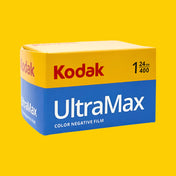
Most 35mm point-and-shoot cameras do not require anything unusual.
ISO 100 or 200 film works well in bright conditions. ISO 400 is a useful everyday option if you expect mixed weather, travel, indoor situations or generally want more flexibility.
Black-and-white film works perfectly well too. The main thing is to make sure the camera supports the ISO you want to use, particularly if it relies entirely on DX coding.
Are Point-and-Shoot Cameras Good for Beginners?
For many people, yes.
They allow somebody new to film to concentrate on photographs rather than camera operation. You can learn composition, light, timing and the discipline of a limited number of frames without trying to master every technical control at the same time.
If your main aim is to learn aperture, shutter speed and interchangeable lenses, an SLR may suit you better. If the aim is simply to start taking photographs on film and enjoy the process, a point-and-shoot is difficult to beat.
Are Expensive Point-and-Shoot Cameras Better?
Some premium compact cameras genuinely have excellent lenses and desirable features, but vintage-camera prices are also affected by rarity, reputation, design, collectability and fashion.
There is nothing wrong with wanting one of those cameras. The mistake is assuming that price alone tells you which camera will produce the most enjoyable photography.
A well-tested compact you take everywhere can be far more useful than an expensive camera you become reluctant to use.
So Which Type Should You Buy?
If you want the easiest first film camera, look for an autofocus model with automatic exposure and straightforward film handling.
If genuine pocketability matters most, a small fixed-lens compact will generally make more sense than a substantial zoom. For holidays, a moderate zoom can be useful because it gives you more framing options without carrying anything else.
If nights out and social photography are the priority, pay attention to autofocus and flash behaviour. If you want a simpler analogue experience, a fixed-lens or zone-focus camera may be more satisfying.
And if your main aim is to learn shutter speed, aperture and manual focusing, consider an SLR instead.
The Best Point-and-Shoot Is the One You Actually Take With You
It is easy to turn vintage-camera buying into a hunt for the supposedly perfect model.
The right compact should be easy enough to carry that bringing it with you is not a decision. It should be straightforward enough that, when something happens, you think about the photograph rather than the controls. And it should be dependable enough that you trust it when you press the shutter.
For one photographer that may be an Olympus Mju. For another it might be a Canon Sure Shot, Pentax Espio, Minolta Riva, Nikon compact or something that barely appears in online recommendation lists.
A few cosmetic marks on a reliable camera are less important than pristine paintwork on one with failing autofocus.
Final Thoughts
The appeal of the 35mm point-and-shoot film camera is ultimately simple: it removes much of the machinery between noticing something and taking a photograph.
You still have a physical roll of film in the camera, a limited number of exposures and the anticipation of waiting to see what you captured. The camera simply makes getting there easier.
Before buying, decide whether you want a fixed lens or zoom, how much automation you prefer, whether flash matters and how small the camera genuinely needs to be. Check which battery it requires and, above all, whether it has actually been tested.
Then look beyond the hype.
There are excellent compact 35mm cameras from Canon, Olympus, Pentax, Minolta, Nikon, Ricoh, Yashica and many other manufacturers. The right one does not have to be the most expensive model in the room.
Browse Film Camera Store's 35mm Point & Shoot Cameras to compare currently available compact film cameras.
(FCS-B-106)