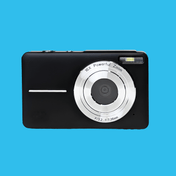

Compact digital cameras from the late 1990s, 2000s and early 2010s have found a completely new audience. Once pushed aside by smartphones, older digital cameras are now being picked up again for almost the opposite reason they were originally bought: they are small, straightforward and capable of producing photographs that look noticeably different from the highly processed images we have become used to seeing from modern phones.

For some people, the attraction is the direct-flash look. For others, it is the lower resolution, distinctive colours, slightly unpredictable results or unmistakable early-digital feel. There is also something genuinely enjoyable about using one. Anyone who carried a compact digital camera in the 2000s will probably remember waiting for the lens to extend, taking the picture and then everyone crowding around a tiny LCD screen to see whether the flash had actually caught it.
But if you are buying your first digicam today, the choice can be confusing. Canon, Sony, Nikon, Fujifilm, Olympus, Kodak, Vivitar, Praktica and many other manufacturers produced a huge number of cameras, and the specifications alone do not necessarily tell you which one will be enjoyable or practical to use.
So which digicam should you buy? The answer has much more to do with how you want to use it than simply finding the camera with the largest megapixel number.
What Is a Vintage Digicam?
“Digicam” is simply a shortened form of digital camera, but today the term is commonly associated with the compact digital cameras that became popular from the late 1990s through the 2000s and into the early 2010s. These were the cameras many of us carried before smartphones became the normal way to photograph everyday life.
Most have a built-in lens, rear LCD screen, automatic exposure and built-in flash. Some are extremely simple point-and-shoot cameras, while others offer optical zoom lenses, exposure compensation and surprisingly sophisticated shooting controls. What makes them interesting now is where they sit in the development of digital photography: they are digital, but they often pre-date the increasingly polished computational processing we associate with modern phones.
If you are searching for the best vintage digital camera, that character can be every bit as important as the specification sheet.
Why Are Vintage Digital Cameras Popular Again?
There isn't one single reason. For some photographers it is nostalgia; these are the sorts of cameras that recorded family holidays, school trips, nights out and everyday life during the late 1990s and 2000s. For younger photographers, the attraction can be almost the opposite. They may never have used these cameras first time around, and the imperfections of early digital photography can feel refreshingly different from the technically excellent images produced by a modern phone.
Direct flash is a big part of the look. It can produce a bright foreground, darker background and harder lighting that immediately recalls 2000s party photography. Older cameras can also have their own colour rendering, white-balance behaviour, sharpening and noise characteristics, all of which contribute to the feel of the final photograph.
Then there is the experience of carrying a separate camera. You can go out to take photographs without notifications, messages or the temptation to immediately edit and upload everything. You still have the convenience of digital photography, but the camera has one main job.
What Should a Beginner Look for in a Digicam?
Megapixels are usually the first specification people notice, but with an older digital camera there are much more important things to check. A working flash matters if you want the classic direct-flash look, particularly for nights out and indoor photography. Battery choice also matters: some cameras use ordinary AA or AAA batteries, while others rely on proprietary rechargeable packs that may now be harder to replace.
Memory-card compatibility is another important consideration. Depending on the model, you may encounter SD, CompactFlash, Sony Memory Stick, xD-Picture Card or other formats, and some older cameras will only recognise cards up to a certain capacity. Before buying, make sure you know which card is required and how you are going to transfer the photographs to your phone or computer.
If your camera uses SD or microSD storage, Film Camera Store also stocks memory cards and card readers to help with storing and transferring your photographs.
The LCD screen should also be usable, even if it looks tiny compared with a modern display, and a motorised zoom lens should extend and retract smoothly. Compact-camera lens mechanisms contain small moving parts and can develop problems with age, so repeated hesitation or lens errors are worth taking seriously.
There are several other checks worth making before spending your money, which we cover in more detail in our guide to what to check before buying a vintage digital camera.
CCD vs CMOS: Does It Matter?
You will frequently see CCD sensor mentioned when vintage digicams are discussed online. Many popular compact cameras from the period did use CCD sensors, although CMOS technology became increasingly widespread as digital cameras developed. CCD cameras have gained a reputation for distinctive colour and an appealing early-digital character, but it is easy to take that idea too far.
A CCD sensor on its own does not magically create a particular “retro” photograph. The lens, flash, exposure, white balance, image processor, resolution and the manufacturer's own processing all influence the finished image. I would therefore not choose a poor-condition camera simply because somebody has described it as a desirable CCD model.
If that side of older digital photography interests you, our CCD digicams explained guide looks more closely at CCD versus CMOS and what actually contributes to the vintage digital look.
Which Vintage Digicams Are Good for Beginners?
There is no single model that automatically makes the best first digicam, but some types are easier to live with than others. Cameras using readily available batteries and common memory cards can be more practical, while very small pocket cameras may suit someone who mainly wants something for nights out or travel.
Canon's PowerShot range is worth looking at because it included everything from simple family point-and-shoot cameras to more advanced compacts. Sony's Cyber-shot range produced many genuinely pocketable cameras, although buyers should remember that a number of older models use Sony Memory Stick storage. Nikon's Coolpix family also included plenty of straightforward automatic cameras, while Fujifilm's FinePix range reaches right back into the early days of consumer digital photography and includes some particularly distinctive models.
Olympus and Kodak are also worth considering. Olympus produced a large number of small zoom compacts, while Kodak's EasyShare cameras were designed around simple everyday photography. With all of these brands, the important thing is not simply the badge on the front but the condition of the individual camera and whether the batteries, charger and storage it needs are still practical to obtain.
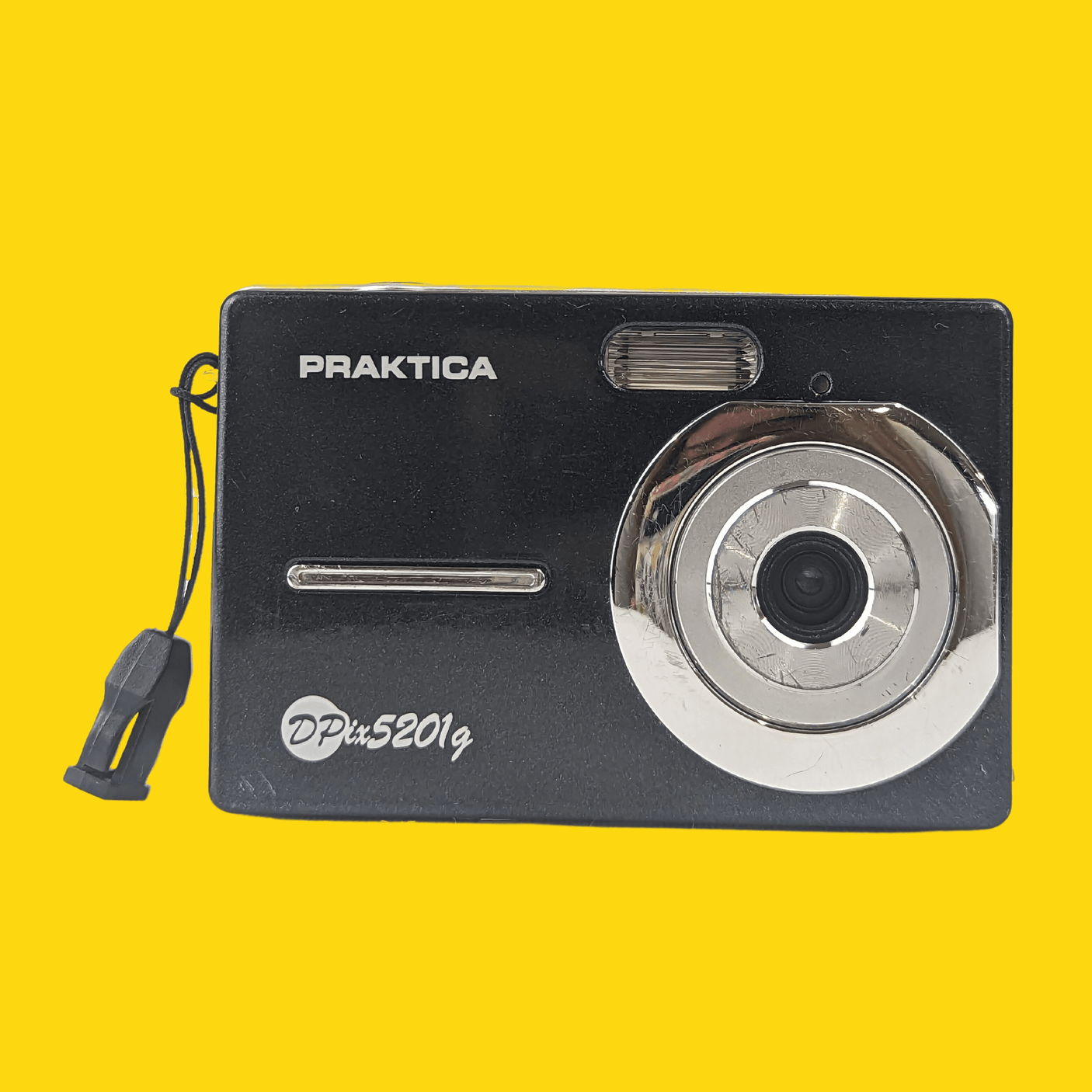
Film Camera Store has also stocked original compact models such as the Praktica DPix 5201G and Vivitar ViviCam 3935. Availability of individual vintage models naturally changes, but they illustrate the type of straightforward compact digital camera worth considering when you are starting out.
We will look more closely at Canon PowerShot, Sony Cyber-shot, Nikon Coolpix and Fujifilm FinePix cameras in our dedicated vintage digicam brand comparison.
What Matters More Than Megapixels?
It is very easy to compare two old cameras and assume the one with more megapixels must be better, but it does not necessarily work like that. Resolution matters if you intend to crop heavily or make large prints, but for photographs of friends, holidays, nights out and everyday life, relatively modest resolution can be perfectly adequate.
If you are deliberately buying an older camera because you like the character of early digital photography, chasing the highest specification can rather miss the point. A lower-resolution compact with a clean lens, working flash and dependable battery can be a much better buy than a higher-specification camera with a damaged screen, unreliable zoom or exhausted battery.
Condition, reliability, flash operation, battery availability, memory-card compatibility and simple usability usually matter more. The best old digital cameras are often simply the ones you will actually put in your pocket and take with you.
Original Vintage Digicam or a Modern Retro-Style Camera?
There is now another option that did not really exist when the digicam revival began. Alongside original cameras from the 1990s and 2000s, you can now buy modern digital cameras designed around the small size, direct flash and deliberately simple shooting experience associated with that era.
An original Canon PowerShot, Sony Cyber-shot, Nikon Coolpix, Fujifilm FinePix, Praktica, Vivitar or similar camera gives you the genuine sensor, lens and image processing of its time. For many enthusiasts, that authenticity is precisely the attraction. The downside is age: batteries, screens, lens mechanisms, chargers and older memory-card formats can all become issues.
A modern retro-style digicam can provide a similar pocketable experience while using more convenient charging and storage. It will not produce exactly the same result as a twenty-year-old camera, but for someone primarily interested in the small-camera, direct-flash, Y2K-style experience, it may be the more practical choice.
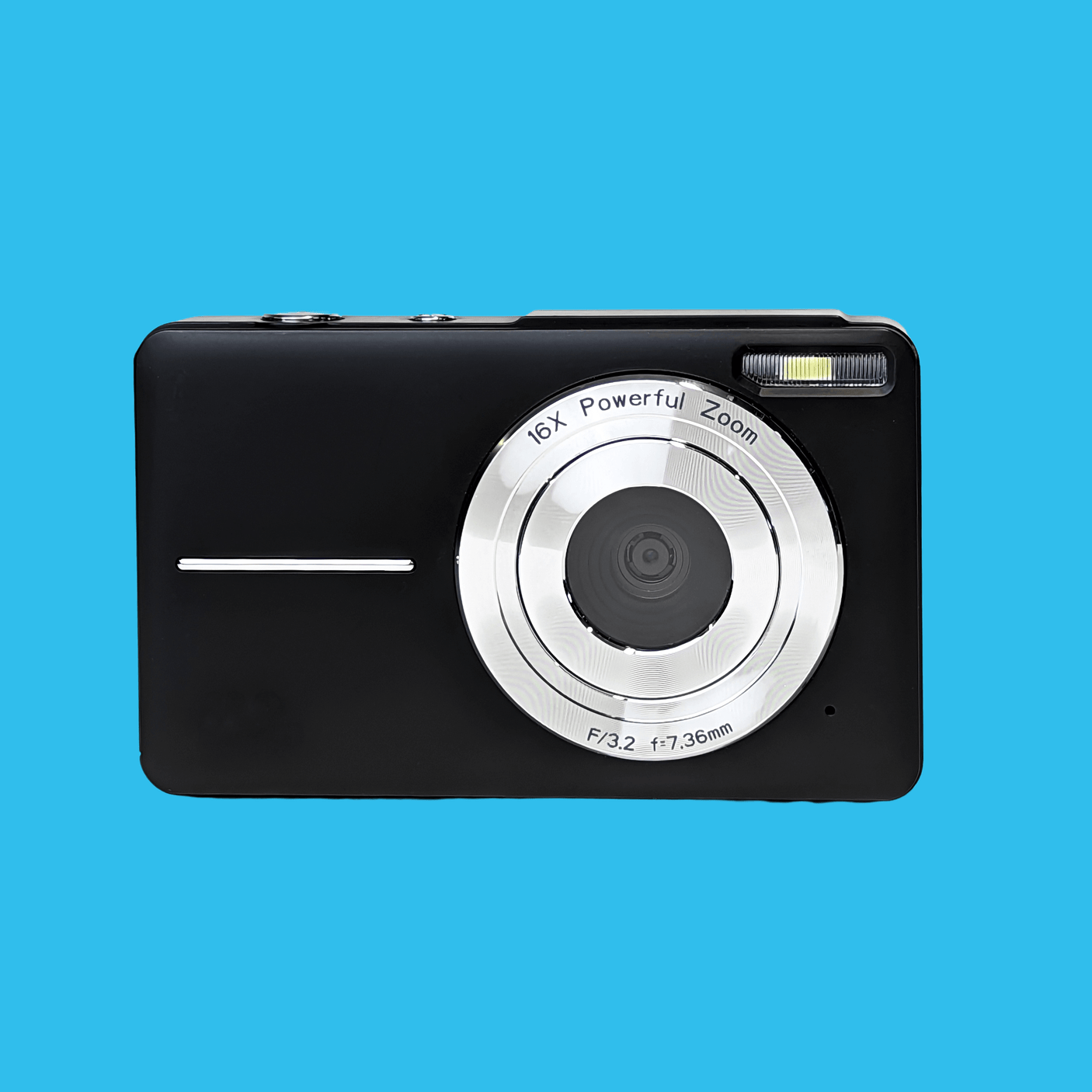
Film Camera Store's current retro digital camera collection includes compact cameras designed around that straightforward point-and-shoot experience, alongside relevant memory-card accessories.
Which Digicam Should I Buy?
Rather than beginning with a particular model, start with the photographs you want to take. For nights out and parties, a genuinely pocketable camera with a dependable built-in flash and simple automatic operation is likely to be more useful than something complicated. For travel, battery availability, compact size, optical zoom and easily obtainable memory cards become more important.
For a complete beginner, simplicity is usually a virtue. A camera that performs reliably in automatic mode can be a much better introduction than one full of controls you never use. If you mainly want the classic 2000s look, concentrate on the overall character of the camera and its photographs rather than simply buying the oldest model you can find. If you want more control, look for features such as exposure compensation, different metering modes and, on some enthusiast compacts, manual exposure controls.
The best choice is the camera that suits the experience you want rather than whichever model happens to have the most hype around it.
Are Vintage Digicams Good for Beginners?
They can be excellent beginner cameras because they remove many of the costs and uncertainties associated with film while still giving you the experience of carrying and using a dedicated camera. You can experiment freely, see your photographs immediately, try something different and keep shooting without paying every time you press the shutter.
At the same time, a separate camera offers something a phone does not quite replicate. You have a physical shutter button, an optical zoom on many models, a dedicated flash and a device that exists purely for making photographs. That small separation from your phone can make photography feel more deliberate without making it difficult.
For somebody looking for a fun, inexpensive-to-use and noticeably different way to make pictures, a vintage or retro digital compact can be a very good place to start.
Browse Vintage & Retro Digital Cameras
There is no single best vintage digital camera for everyone. Your ideal camera might be an original 2000s compact with all the quirks that come with its age, or you might prefer a modern retro-style camera that offers the simplicity and aesthetic without relying on electronics that may already be around twenty years old.
Either way, start with the same questions: Will I actually carry it? Is it easy to use? Can I power it? Can I get the photographs off it? And does it make the kind of pictures I want? Those questions matter much more than the number printed next to “megapixels”.
You can browse the current Film Camera Store digital camera collection to see the compact digital cameras and accessories currently available.
(FCS-B-102)