
How to Choose the Right Battery for Your Film Camera
You have found a vintage film camera, opened the battery compartment and discovered that the battery which once powered it disappeared from the shelves years ago. Or perhaps you have bought a camera without a battery and are now faced with unfamiliar codes such as LR44, SR44, 4LR44 and CR123A.
For something so small, the battery can cause a surprising amount of confusion.
The good news is that many film cameras use batteries that are still readily available today, while others have practical modern alternatives. The important part is identifying exactly what your camera was designed to use rather than choosing a battery simply because it happens to fit.
That is particularly important with older cameras because batteries do very different jobs. In one camera the battery might power nothing more than the exposure meter. In another it may control the shutter, exposure system, autofocus, flash and film transport.
Remove the battery from the first type and you may still be able to take photographs. Remove it from the second and the camera may appear completely dead.
This guide explains the most common film camera batteries, why battery type and voltage can matter, what happened to older mercury cells, and what to check before putting a replacement battery into a vintage camera.
Why Do Film Cameras Need Batteries?
Not every film camera uses electrical power in the same way.
Many older mechanical cameras use a battery only for their built-in exposure meter. Their shutter and film-advance mechanisms remain mechanical.
The Pentax K1000 is a classic example. Its battery powers the light meter, while its shutter is mechanically operated. If the battery fails, you lose the built-in meter rather than the ability to release the shutter.

Electronically controlled cameras can be very different. The Olympus OM10, for example, uses two LR44 batteries and relies on electrical power for normal shutter operation.
Later point-and-shoot cameras often depend on batteries for even more functions. Autofocus, powered zooms, automatic film loading, exposure control, LCD displays and built-in flash may all rely on the same power source.
This is why a vintage camera that appears completely lifeless is not necessarily broken. Before assuming the worst, one of the first questions should be: does it have the correct working battery?
What Battery Does My Film Camera Need?
There is no universal film camera battery. The correct type depends on the individual make and model.
The safest approach is to check the camera's original instruction manual, the markings inside or around the battery compartment, or a reliable specification for that exact model.
Do not assume that two cameras from the same manufacturer — or even cameras from a similar period — use the same battery.
Common battery formats found in film cameras include:
- LR44 alkaline button cells
- SR44 silver-oxide button cells
- 4LR44 6V batteries
- CR123A lithium batteries
- AA and AAA batteries in some cameras and accessories
- Older discontinued battery types that may require a suitable modern alternative
The code matters. A battery that appears to be the right size is not necessarily the correct electrical replacement.
LR44 and SR44 Batteries: What Is the Difference?
LR44 and SR44 cells are among the most familiar batteries used in classic film cameras. They are physically similar and have a similar nominal voltage, but they use different chemistry.
LR44 batteries are alkaline. They are inexpensive and widely available.
SR44 batteries are silver oxide. They generally maintain their voltage more consistently as they discharge, which can be useful in photographic equipment where stable electrical performance is desirable.
Some cameras were designed to accept either type.
The Olympus OM10, for example, uses two LR44 cells, while the Nikon FG can use two LR44 alkaline or SR44 silver-oxide cells.
The important point is not to turn this into a universal rule. Always check the specification for the exact camera you own.
What Is a 4LR44 Battery?
A 4LR44 is a larger 6V cylindrical battery used by a number of electronically controlled film cameras.
The Canon AE-1 is a good example. Film Camera Store lists the camera as using a single 4LR44 battery.

This is quite different from a mechanically controlled camera where the battery powers only the exposure meter. The AE-1's electronically controlled shutter needs battery power for normal operation.
What About CR123A Batteries?
CR123A lithium batteries became common in later electronically controlled cameras, particularly autofocus point-and-shoot models.
Their higher-voltage lithium chemistry makes them well suited to cameras that need to operate motors, electronic shutters, autofocus systems and built-in flash.
The Pentax Espio 120, for example, uses a single CR123A battery.
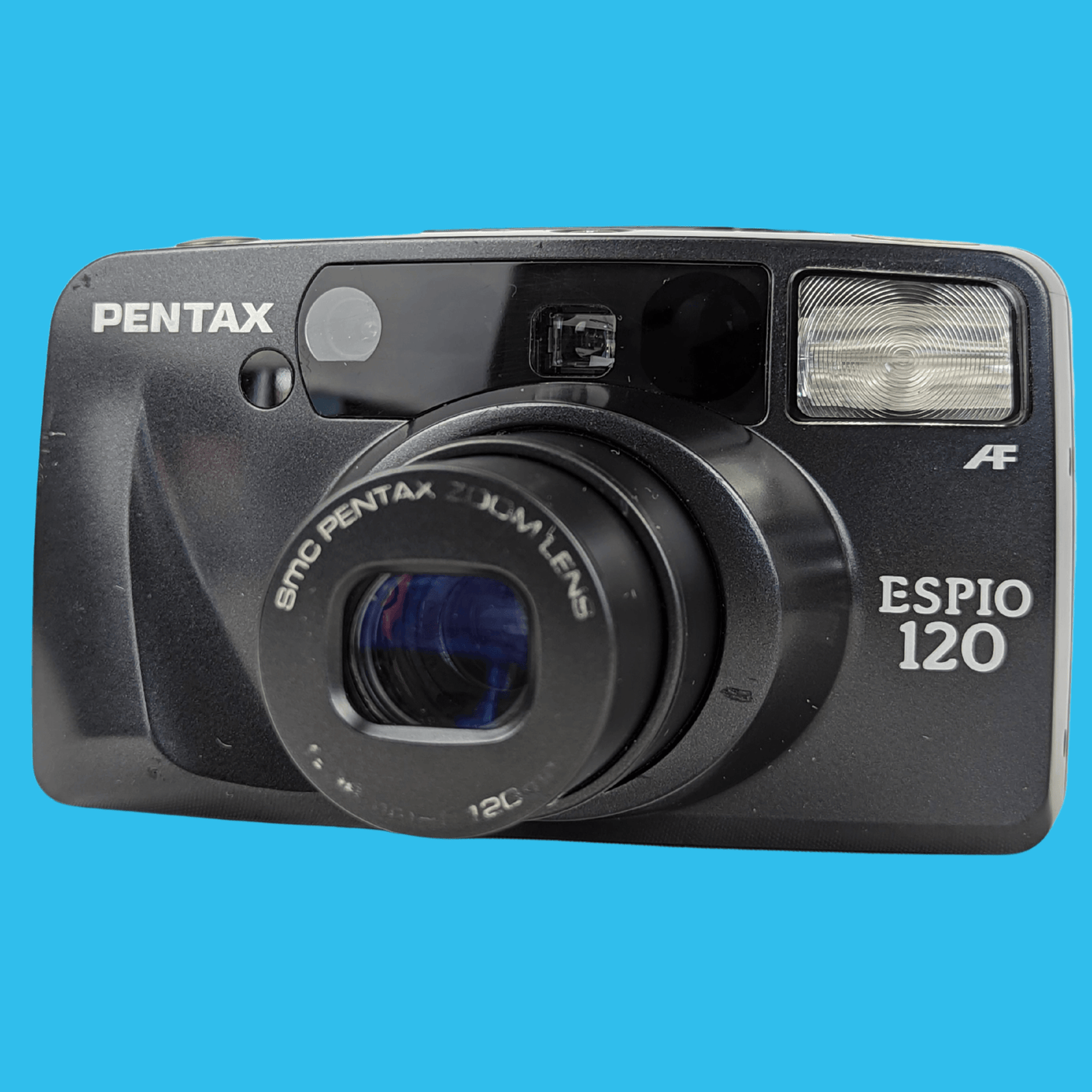
This illustrates how much camera power requirements changed as automation increased. A traditional mechanical SLR might need a small button cell only to operate its meter, while a later compact camera may depend on its battery for almost every part of the photographic process.
Why Are Mercury Batteries a Problem in Some Vintage Cameras?
This is where vintage camera batteries can become more complicated.
A number of older cameras and exposure meters were designed around mercury cells, including batteries from the PX625 family.
These batteries provided approximately 1.35V and maintained a relatively stable voltage during much of their working life.
Mercury batteries were later withdrawn from general consumer use because of the environmental and health risks associated with mercury.
The problem for photographers is that a modern battery of roughly the same physical size may not have the same voltage or discharge characteristics.
In some vintage cameras, particularly those where battery voltage forms part of the exposure-metering circuit, substituting a modern 1.5V or 1.55V cell for an original 1.35V mercury battery can affect the meter reading.
That can potentially affect exposure accuracy.
Can I Replace a 1.35V Mercury Battery with a Modern 1.5V Battery?
Sometimes, but there is no safe universal answer.
A modern alkaline or silver-oxide battery may physically fit an older battery compartment while supplying a different voltage from the original mercury cell.
Whether that matters depends on the camera and the way its electrical circuit was designed.
Possible solutions for equipment originally designed around 1.35V mercury cells can include specialist replacement cells, voltage-regulating adapters, recalibration or the use of an independent exposure meter.
The correct approach depends on the individual camera.
If you own a model designed for a discontinued battery, identify the original battery specification before buying a replacement. A battery being the correct physical size does not automatically make it the correct electrical substitute.
Common Film Camera Battery Examples
The following examples demonstrate how different the power requirements of popular film cameras can be:
| Film camera | Battery | How the battery is used |
|---|---|---|
| Pentax K1000 | Button-cell battery for metering | Powers the exposure meter; the shutter remains mechanically operated |
| Olympus OM10 | 2 × LR44 | Required for normal electronic shutter operation |
| Nikon FG | 2 × LR44/SR44 or 1 × CR-1 | Normal operation is electronic; 1/90 sec remains mechanically available if the batteries fail |
| Canon AE-1 | 1 × 4LR44 | Required for normal shutter operation |
| Pentax Espio 120 | 1 × CR123A | Powers the camera's electronic functions, autofocus, zoom and flash systems |
These examples are not intended as a universal compatibility chart. Manufacturers changed battery requirements between models and generations, so always confirm the specification of the particular camera in front of you.
Why Battery Voltage Matters
When replacing an old camera battery, it is easy to concentrate entirely on whether the replacement physically fits. Voltage can be just as important.
A camera's electrical system was designed around a particular power supply.
With many later cameras still using readily available batteries, replacement is straightforward. Problems are more likely to arise when trying to substitute modern cells for discontinued batteries in much older equipment.
Exposure meters are particularly relevant because they are measuring devices. If an older meter was designed around the electrical behaviour of a particular battery, changing that behaviour can alter its reading.
That does not mean every vintage film camera requires specialist modification. It simply means that the manufacturer's original specification should be the starting point rather than trial and error.
Why Can a Film Camera Appear Dead Even with New Batteries?
Installing fresh batteries does not always bring a vintage camera back to life.
One of the first things worth inspecting is the battery compartment itself. Cameras stored for long periods with exhausted batteries inside can develop corrosion or contamination on the contacts.
Even relatively small amounts of oxidation can interfere with electrical contact.
Other possibilities include:
- the batteries being inserted with the wrong polarity
- the wrong battery type being fitted
- dirty or oxidised contacts
- damage to the battery-compartment terminals
- a loose or damaged internal electrical connection
- an underlying electronic or mechanical fault
Do not repeatedly force controls or continually press the shutter release if an old camera refuses to operate. First establish that the correct batteries are installed in the correct orientation and making proper contact.
If you are assessing a camera before purchase, our used film camera buying checklist covers batteries alongside shutters, meters, lenses, light seals and film transport.
How to Check a Film Camera Battery Compartment
Remove the old battery and inspect the compartment in good light.
The metal contacts should be clean enough to make reliable electrical contact. Powdery deposits, heavy discolouration, rust or obvious signs of leakage deserve closer attention.
Serious battery leakage can damage terminals, wiring and surrounding components rather than simply making the compartment look untidy.
Check the polarity markings before fitting the replacement. Button cells in particular are easy to insert incorrectly if you are unfamiliar with the camera.
If there is significant corrosion or evidence that leakage has travelled beyond the battery compartment, professional inspection may be safer than aggressive DIY cleaning.
Does a Mechanical Film Camera Still Need a Battery?
It may do, but not necessarily to take a photograph.
This distinction causes a great deal of confusion.
The Pentax K1000 has a mechanically controlled shutter. Its battery powers the light meter rather than the shutter itself. If its meter battery dies, the camera can still expose film provided you have another way of determining the correct exposure.
An electronically controlled camera such as the Canon AE-1 behaves differently because battery power is required for normal shutter operation.
There are also cameras that sit somewhere between those two extremes.
The Nikon FG, for example, normally uses an electronically controlled shutter but retains a mechanically controlled 1/90-second shutter speed that can still be used if battery power is lost.
So asking whether a film camera “takes batteries” only tells you part of the story.
A more useful question is: what does the battery actually power?
Should You Carry a Spare Film Camera Battery?
If your camera depends on electrical power, carrying a spare is sensible.
A button cell or CR123A takes up very little room in a camera bag and can prevent a day's photography ending simply because the battery has failed.
This is particularly worthwhile when travelling, photographing an event or using an electronically controlled camera that offers limited warning before its battery becomes too weak to operate.
Store spare batteries so that their terminals cannot come into contact with loose metal objects such as keys or coins. Their original packaging or a small battery case is preferable to carrying batteries loose in a bag or pocket.
Alkaline or Silver Oxide for a Film Camera?
Where the manufacturer specifies that either LR44 alkaline or SR44 silver-oxide cells can be used, both may be suitable.
Silver-oxide cells generally maintain their voltage more consistently through their useful life, which is one reason they are often favoured for photographic equipment.
However, this should not be confused with the older mercury-battery issue.
A modern silver-oxide battery is not automatically a direct electrical replacement for an old 1.35V mercury cell simply because both offer relatively stable voltage characteristics.
The nominal voltage is different.
As throughout this guide, the correct specification for the individual camera matters more than any general rule.
Buying a Battery for Your Film Camera
If you already know exactly which battery your camera requires, replacement is usually straightforward.
Film Camera Store has a dedicated camera battery section, although compatibility should still be checked against the exact camera model before ordering.
If you are unsure, establish the full make and model first. “Canon SLR” or “Olympus film camera” is not specific enough because manufacturers produced cameras with very different electrical requirements over several decades.
Battery compatibility is also worth considering when buying a vintage camera. A model using a common modern cell is convenient, but an older battery specification is not automatically a reason to reject an otherwise excellent camera.
You simply need to understand what the correct replacement solution is before relying on it.
Film Camera Battery FAQs
Do all film cameras need batteries?
No. Some cameras are entirely mechanical, while others use batteries only for their exposure meters. Electronically controlled cameras may depend on batteries for their shutters and other essential functions.
Can I use an LR44 instead of an SR44?
Sometimes. Some cameras are specified to work with either type, but you should always check the requirements of the exact camera rather than assuming that the two batteries are universally interchangeable.
Why won't my film camera work after changing the battery?
Check that the correct battery has been fitted, that its polarity is correct and that the contacts are clean. If those are all correct, the camera may have an electrical or mechanical fault requiring further investigation.
Can I put a 1.5V battery in a camera designed for a 1.35V mercury cell?
Not without checking the particular camera. Some vintage metering systems can be affected by the difference in voltage, so a model-specific replacement solution is preferable.
How do I know whether my camera will work without a battery?
Check the instruction manual or a reliable specification for the exact model. Appearance alone will not tell you: two manual-focus SLRs from the same period can have completely different power requirements.
Final Thoughts: Choosing the Right Film Camera Battery
Film camera batteries become much easier to understand once you separate three questions: which battery does the camera require, what electrical specification was it designed for, and what does the battery actually power?
For many popular film cameras, replacement is straightforward. LR44, SR44, 4LR44 and CR123A batteries remain readily available and are small enough that carrying a spare is easy.
Older cameras designed around discontinued mercury cells require more care. In those cases, choosing something that merely fits the compartment may not be enough because voltage and meter design can matter.
Most importantly, do not assume that a vintage camera which refuses to operate is necessarily faulty. The battery type, polarity, contacts and condition of the battery compartment are all worth checking first.
If you are choosing your next camera, explore Film Camera Store's range of film cameras, or read our guide to checking a used film camera before buying.
(FCS-B-097)