
Mechanical vs Electronic Film Cameras
If you are choosing a vintage film camera, one of the distinctions you will eventually come across is whether a camera is described as mechanical or electronic.
It can sound like a fairly technical detail. In reality, it can affect how a camera feels to use, how dependent it is on batteries, the exposure modes it can offer and what happens if something stops working several decades after the camera was made.
It is also an area where some very broad claims are often made. Mechanical cameras are sometimes presented as virtually indestructible, while electronic cameras are dismissed as complicated or unreliable. Neither description tells the whole story.
There are excellent cameras in both camps, along with many designs that combine mechanical and electronic features. The more useful question is not simply which technology is better, but which type of film camera better suits the way you want to take photographs.

What Is a Mechanical Film Camera?
In a mechanical film camera, the shutter mechanism can operate without electronic control. Springs, gears and precisely engineered mechanical components govern the opening and closing of the shutter rather than an electronic timing circuit.
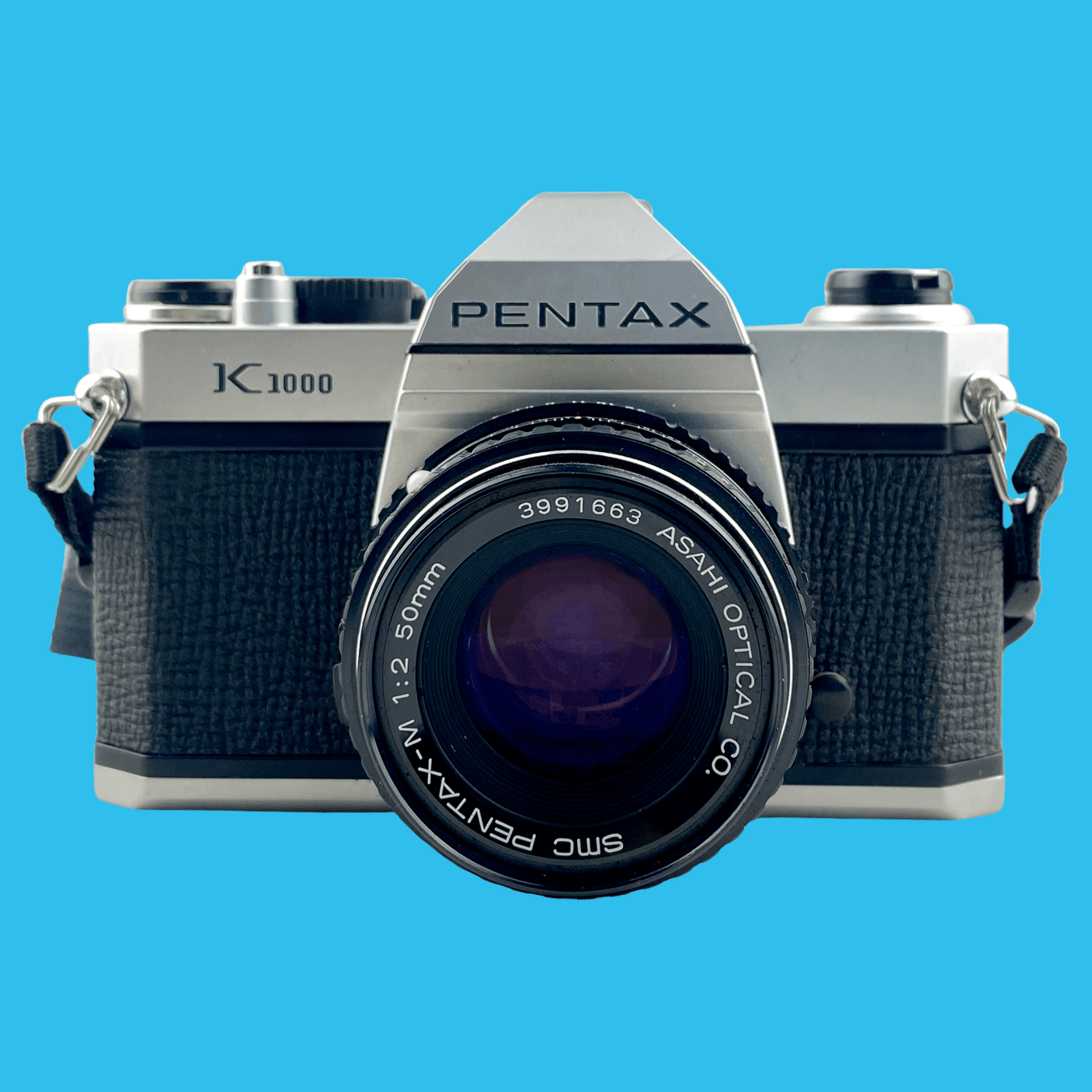
A classic example is the Pentax K1000. Its shutter remains mechanically operated, which means the fundamental act of taking a photograph does not depend on battery power.
That does not necessarily mean a mechanical camera contains no electronics or never uses a battery. The K1000, for example, uses battery power for its built-in light meter. If that battery fails, the meter stops assisting you, but the shutter itself can still be fired.
This distinction matters because the phrase “fully mechanical” is sometimes interpreted to mean “doesn't use batteries at all”. In many cameras, the more accurate meaning is that battery power is not required to operate the shutter.
What Is an Electronic Film Camera?
An electronic film camera uses electrical circuits to control important camera functions. In many 35mm SLRs this includes shutter timing, metering and automatic exposure modes.
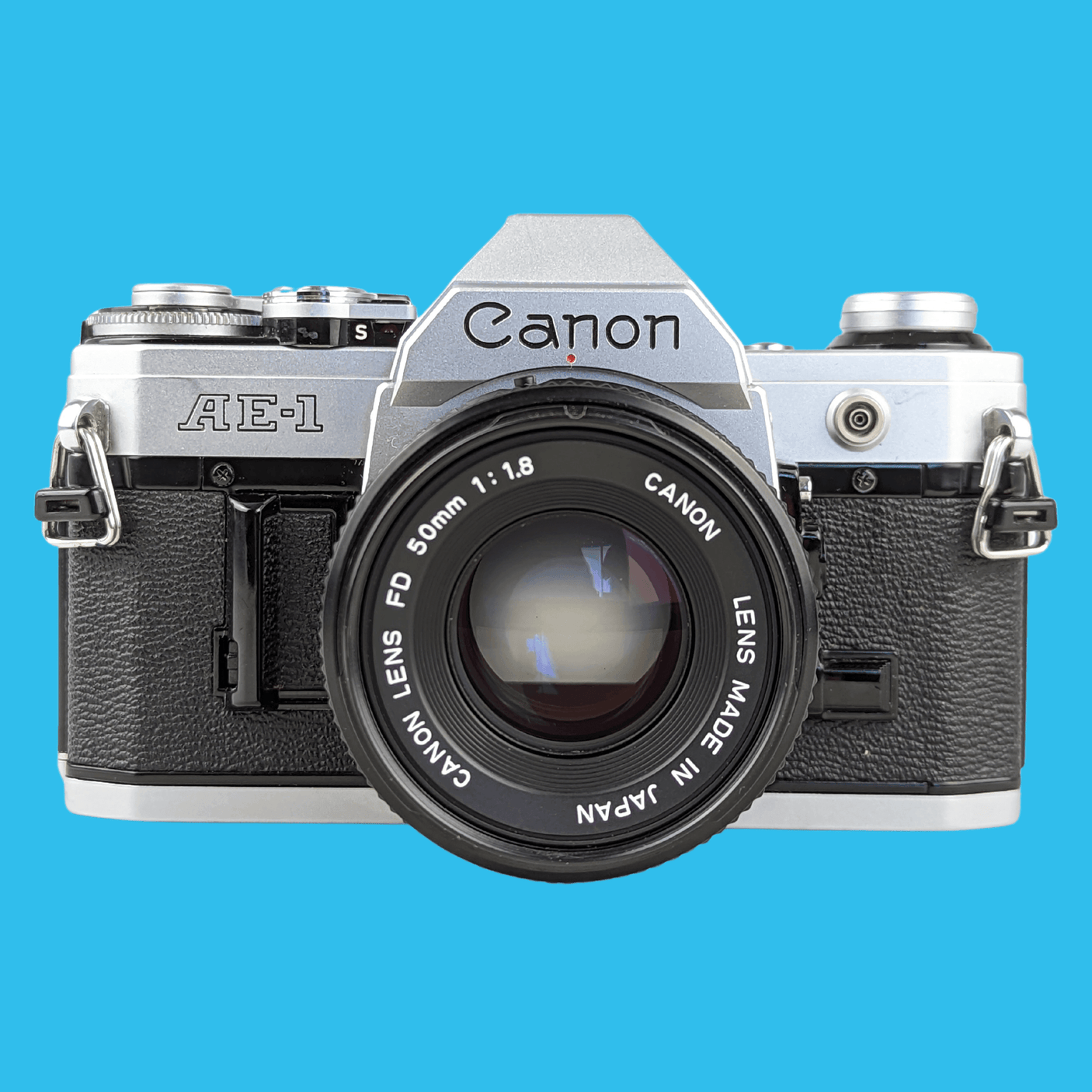
The Canon AE-1 is a famous example. Its electronically controlled design helped make automatic exposure much more accessible, but the camera is dependent on battery power for operation.
The Olympus OM10 takes a different approach. In its normal configuration it provides aperture-priority automatic exposure: you choose the aperture and the camera's electronics determine an appropriate shutter speed. An optional Manual Adapter adds manual shutter-speed control.
Then there are cameras such as the Nikon FG. Its shutter is electronically controlled and the camera offers Program, Aperture Priority and Manual exposure, yet it also provides mechanical M90 and Bulb settings that can still be used if the batteries are exhausted.
That is a useful reminder that vintage camera design rarely fits perfectly into two neat boxes.
Mechanical vs Electronic Does Not Mean Manual vs Automatic
This is probably the most important misconception to clear up.
Mechanical and manual are not interchangeable terms.
“Mechanical” describes how the camera's shutter or other mechanisms operate. “Manual” describes the amount of control the photographer has over exposure settings.
A mechanical camera may require you to choose both aperture and shutter speed yourself. An electronically controlled camera may also offer full manual exposure while adding automatic modes when you want them.
The Nikon FG demonstrates this particularly well: it gives the photographer Manual, Aperture Priority and Program modes, despite using an electronically controlled shutter.
If your main goal is to learn exposure, therefore, you do not necessarily need to avoid electronic cameras. What matters is whether the individual camera gives you the controls you want.
The Biggest Practical Difference: Batteries
Battery dependence is where the distinction becomes most obvious in everyday use.
With a mechanically controlled shutter, running out of battery power may only mean losing the light meter. You can continue shooting if you are able to judge exposure yourself or use an external meter.
With a fully battery-dependent electronic camera, a flat battery can stop the camera from taking photographs altogether.
That sounds like a decisive victory for mechanical cameras, but in normal use it is much less dramatic than it sounds. Film-camera batteries are small, inexpensive and easy to carry. Keeping a spare in your camera bag largely removes the problem.
What matters more when buying an older electronic camera is that the battery compartment is clean, the electrical contacts are sound and the camera has been properly tested. Our guide to what to check before buying a used film camera explains why battery compartments, meters and shutter operation should all be inspected rather than assuming that a camera works because it powers on.
If you need a replacement, you can also browse our film camera batteries.
Are Mechanical Film Cameras More Reliable?
Mechanical cameras have a deserved reputation for durability. A well-designed shutter mechanism can continue working for decades, and the absence of complex electronics removes one category of potential failure.
But “mechanical” does not mean “maintenance-free”. Lubricants can dry out. Springs can weaken. Shutters can become inaccurate. Foam seals deteriorate. Controls can stiffen after years without use.
A camera may still fire and yet no longer expose accurately at every shutter speed.
Electronic cameras introduce different potential problems. Ageing circuits, damaged contacts and failed electronic components can sometimes be more difficult to repair, particularly when original parts are no longer available.
Even so, plenty of electronically controlled cameras from the 1970s, 1980s and 1990s continue to work perfectly today. The condition of the individual camera is usually more useful than a blanket judgement based on whether its shutter is mechanical or electronic.
This is why proper testing matters more than mythology. Our film camera grading guide explains the difference between cosmetic condition and the actual functional assessment of a vintage camera.
Electronic Cameras Can Make Film Photography Easier
One of the major advantages of electronic control was the ability to give photographers increasingly sophisticated automatic exposure.
With an aperture-priority camera such as the Olympus OM10, you choose the aperture according to the depth of field you want and the camera takes care of shutter speed. This leaves you free to concentrate on focus, framing and timing.
For a photographer coming from a smartphone or modern digital camera, that can make the transition to film considerably less intimidating.
It also does not stop you learning. You still choose film speed, aperture, focus and composition, and you quickly begin to understand how changing the aperture affects both the appearance of the photograph and the shutter speed selected by the camera.

Mechanical Cameras Offer a More Hands-On Experience
For other photographers, having fewer automated decisions is precisely the attraction.
A camera such as the Pentax K1000 asks you to think about shutter speed and aperture before taking the photograph. The meter can guide you, but you make the final decision.
That can slow the process down in a positive way. Instead of raising the camera and allowing it to decide most of the exposure, you become more aware of the light and of what your chosen settings are doing.
This is one reason simple mechanical SLRs became so closely associated with photography courses and students. Their controls make the relationship between shutter speed, aperture, film speed and exposure unusually clear.
We looked more closely at that difference in our comparison of the Olympus OM10, Nikon FG and Pentax K1000, three cameras that approach the same basic job from noticeably different directions.
Does a Mechanical Camera Make You a Better Photographer?
No — at least not automatically.
A mechanical camera can encourage you to understand exposure because it may require more decisions from you. That educational value is real.
But a photographer using aperture priority still chooses where to focus, what aperture to use, when to press the shutter and what belongs inside the frame. Automation does not remove creativity; it simply delegates part of the exposure calculation to the camera.
There is also nothing particularly virtuous about missing a photograph because you were still adjusting controls.
For street photography, travel, family photographs or situations where light changes quickly, automatic exposure can be extremely useful. For slower landscape, portrait or experimental work, manual control may be part of the enjoyment.
The best system is the one that helps you make photographs rather than the one that sounds most impressive on paper.
What About Repairability?
This is where mechanical cameras often have a genuine long-term advantage.
A skilled technician may be able to clean, adjust or replace mechanical components in a camera even when manufacturer support disappeared decades ago. Some faults require specialist parts, of course, but purely mechanical systems can sometimes be more approachable to repair.
Electronic faults can be different. If a proprietary circuit or component has failed and there is no replacement, repairing the camera may become uneconomical or impossible.
However, that should not be turned into the claim that every mechanical camera is repairable and every electronic camera is disposable. Parts availability, camera design, fault type and technician expertise all matter.
For somebody buying a camera to use now, the most practical protection is to start with an example whose operation has already been properly checked rather than choosing an unknown camera purely because its design is mechanical.
Mechanical vs Electronic Film Cameras at a Glance
| Feature | Mechanical camera | Electronic camera |
|---|---|---|
| Shutter operation | Mechanically timed | Electronically controlled on many models |
| Battery dependence | Shutter may work without batteries | Often requires battery power to operate |
| Exposure modes | Commonly manual | Can include manual, aperture priority, shutter priority or program |
| Shooting experience | Usually more hands-on | Can offer greater speed and convenience |
| Repair considerations | Mechanical faults can sometimes be more serviceable | Some obsolete electronic parts can be difficult to replace |
| Best choice? | Depends on the individual camera and how you want to shoot | |
Four Classic Cameras That Show the Difference
Looking at actual cameras makes the distinction much easier to understand.
The Pentax K1000 represents the straightforward mechanical approach: manual exposure, mechanical shutter operation and a battery-powered meter. It is simple, direct and particularly good for photographers who want to learn exposure from first principles.
The Olympus OM10 takes a more automated route, using electronic control to provide aperture-priority exposure in its standard configuration. It is a particularly approachable choice for someone who wants creative control without having to select every exposure setting for every frame.
The Canon AE-1 combines manual focusing and traditional SLR handling with electronically controlled operation and shutter-priority automatic exposure. Its success helped demonstrate how electronics could make serious 35mm photography easier to use without removing photographer control.
The Nikon FG goes further still, offering Program, Aperture Priority and Manual modes. Yet its mechanical M90 and Bulb settings mean that even this electronically controlled camera retains a limited ability to operate when battery power is unavailable.
Which Type Is Better for Beginners?
There is no universal answer, despite the number of camera-buying guides that try to provide one.
If your priority is to understand shutter speed, aperture and exposure from the beginning, a simple manual camera can be an excellent teacher. You will have to engage with the fundamentals every time you take a photograph.
If your priority is actually getting out and enjoying your first rolls of film without becoming overwhelmed by settings, an electronic SLR with aperture-priority exposure can be the better starting point.
That is why cameras such as the OM10 and FG remain popular alongside more mechanically straightforward models such as the K1000.
Our guide to choosing your first film camera looks at the wider decision, including format, ease of use, lens systems, portability and condition.
Which Type Is Better for Travel?
Mechanical cameras have an obvious appeal for travel because a depleted battery is less likely to leave you unable to take photographs. That can be reassuring if you are somewhere remote or travelling for an extended period.
On the other hand, many electronic cameras are smaller, lighter or quicker to use, while carrying one or two spare batteries adds virtually no weight to a bag.
Once again, the individual camera matters more than the label.
An electronic Olympus OM10 may suit someone who values compact dimensions and quick aperture-priority shooting. Another photographer may happily accept the more deliberate operation of a mechanical K1000 because they value its simplicity.
Which Type Should You Buy?
If you enjoy setting every exposure yourself, want a camera that can continue operating without electrical power and like the tactile simplicity of traditional camera engineering, a mechanical film camera makes a lot of sense.
If you value automatic exposure, quicker shooting and a little more convenience, there is no good reason to avoid electronic cameras simply because they contain circuitry.
There is also a large middle ground. Cameras such as the Nikon FG show that electronic control and mechanical backup can coexist, while many manual-focus electronic SLRs still feel every bit as tactile and involving as their fully mechanical counterparts.
Rather than beginning with the question “mechanical or electronic?”, consider what you actually want from the camera:
- Do you want to learn exposure entirely manually?
- Would aperture priority make everyday photography more enjoyable?
- Are you comfortable carrying a spare battery?
- Do you want the simplest possible camera, or greater flexibility?
- Is the particular camera tested and in good working condition?
Those answers will usually tell you much more than the technology inside the shutter.
Final Thoughts: Mechanical or Electronic?
The debate between mechanical and electronic film cameras sometimes makes the two sound like opposing philosophies. In practice, both produced some of the most enjoyable and enduring cameras of the film era.
Mechanical cameras offer simplicity, tactile control and the reassurance that basic shutter operation may not depend on a battery. Electronic cameras made sophisticated metering and automatic exposure practical, often allowing photographers to work faster while retaining as much creative control as they wanted.
Neither system determines the quality of the photograph. The lens, film, exposure, light and photographer still matter far more.
What matters when buying a vintage camera is choosing a design that suits you — and choosing an individual example that has been properly checked.
If you are ready to compare the different approaches for yourself, explore our 35mm SLR film camera collection, including classic cameras from Pentax, Olympus, Nikon and Canon.
(FCS-B-096)