
Why Film Photography Still Matters in a Digital-First World
For more than two decades, digital photography has shaped how most people take pictures. Faster cameras, sharper files, instant previews and near-limitless storage promised convenience and creative freedom — and for a long time, that promise held true.
Yet in recent years, something has shifted.
Across the UK and beyond, more photographers are making a conscious decision to step away from digital workflows and return to film. Some are rediscovering cameras they once owned. Others are loading a roll of film for the very first time. What unites them is not nostalgia, but a desire for a different relationship with photography — one that feels slower, more deliberate, and more rewarding.
Film is no longer a novelty. It has become a considered choice again.
When Digital Became Effortless & Lost Its Edge
Modern digital cameras are extraordinary tools. Autofocus systems now track eyes instantly, exposure can be rescued endlessly in post-production, and cameras increasingly make creative decisions on the photographer’s behalf.
But with that ease has come a quiet trade-off.
For many photographers, the act of taking a photograph has shifted away from seeing and towards reviewing. Screens dominate the process. Images are captured in quantity, then corrected later. The moment itself becomes secondary.
Film resists that approach entirely.
With 35mm film cameras the photograph is decided at the moment it is taken. There is no preview, no safety net, and no endless refinement afterwards. The camera demands attention, not correction — and that constraint restores purpose to the act of photographing.
Film Reconnects You With the Act of Seeing
One of the most striking changes people notice when they return to film is how it alters their behaviour behind the camera.
Without instant feedback, photographers slow down. Light is judged rather than checked. Composition becomes intentional rather than experimental. Each frame matters because it cannot be undone.
For those experiencing film for the first time — particularly millennials raised on phones and digital screens — this is often the moment photography stops feeling disposable and starts feeling meaningful. The camera becomes something you use, not something that constantly interrupts you.
That shift explains why so many first-time film shooters describe the experience as immersive and absorbing rather than restrictive.
A Look Digital Still Struggles to Replicate
Despite the sophistication of modern editing software, digital photography still struggles to replicate one essential quality of film: character.
Film responds to light organically. Grain is part of the image rather than an overlay. Highlights roll off gently. Colours feel shaped rather than engineered.
These characteristics are subtle, but they are deeply perceptible — especially in a visual culture saturated with ultra-clean digital imagery. Film photographs tend to linger. They feel tactile and considered rather than processed.
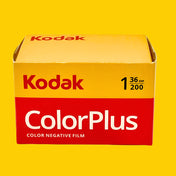
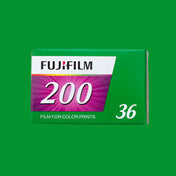
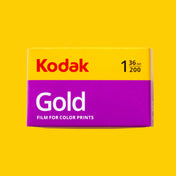
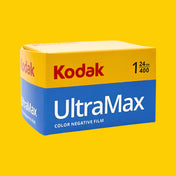
That is why many photographers pair classic cameras with trusted emulsions from the 35mm film stock collection to achieve results that feel honest rather than perfected.
A New Generation Is Choosing Film — Deliberately
The modern film revival is not being driven solely by those reliving the past.
A large proportion of film camera buyers today are under 35. Many have never owned a dedicated camera before. For them, film is not a step backwards — it is an alternative to phones and menu-heavy digital systems.
Mechanical dials, physical shutters and simple viewfinders offer a clarity that modern devices often lack. Film cameras do one thing, and they do it well.
That simplicity resonates strongly with people seeking more intentional creative tools and hobbies that exist away from constant notifications and screens.
Why Classic Film Cameras Still Make Sense Today
One of the most practical reasons film has regained relevance is longevity.
Well-built 35mm cameras from the 1970s, 80s and 90s were designed to be used for decades. When properly tested and serviced, they remain dependable tools rather than fragile antiques.
Models such as the Olympus OM10 and Nikon FG continue to be popular precisely because they balance reliability, simplicity and image quality. They are approachable for beginners, yet capable enough to grow with the photographer.
Unlike digital bodies, these cameras are not made obsolete by software updates or discontinued components. They rely on mechanical precision — and that longevity is part of their appeal.
Film and Digital Are Not Opposites
The renewed interest in film does not represent a rejection of digital photography.
Many photographers today use both. Digital remains invaluable for speed, flexibility and commercial work. Film, meanwhile, strengthens fundamental skills: exposure judgement, composition, patience and confidence behind the camera.
Introducing film into a photographer’s workflow often improves everything else they shoot. The two formats complement rather than compete.
Film Is Easier to Start Than You Might Expect
A common misconception is that film photography is complicated or inaccessible. In reality, starting is straightforward.
35mm film is widely available, processing is reliable across the UK, and there is a strong supply of beginner-friendly cameras. The key is choosing equipment that has been properly checked.
Buying a fully tested camera from a specialist retailer such as Film Camera Store and understanding the camera grading and testing process removes the uncertainty that often discourages first-time buyers.
Load film, set exposure, and start shooting. No firmware, no menus, no distractions.
Why Film Fits Modern Life
In an increasingly digital world, film photography offers something rare: focus.
It encourages photographers to step away from screens, slow down, and engage fully with the act of making images. Photography becomes something you do intentionally, not something that happens passively in the background.
That is why many people who return to film do not see it as a novelty. It becomes a lasting part of their creative life.
Thinking About Trying Film?
Whether you are rediscovering photography after years away or picking up a camera for the first time, film offers a different way of seeing — one that values intention over immediacy and experience over volume.
That is why people are switching back to film.
FCS-B-92